Regional Policy Shifts Reshaping Access Patterns to Interactive Reel and Matchup Formats on Wireless Networks
Theo Wagner · Jun 26, 2026

Regional Policy Shifts Reshaping Access Patterns to Interactive Reel and Matchup Formats on Wireless Networks
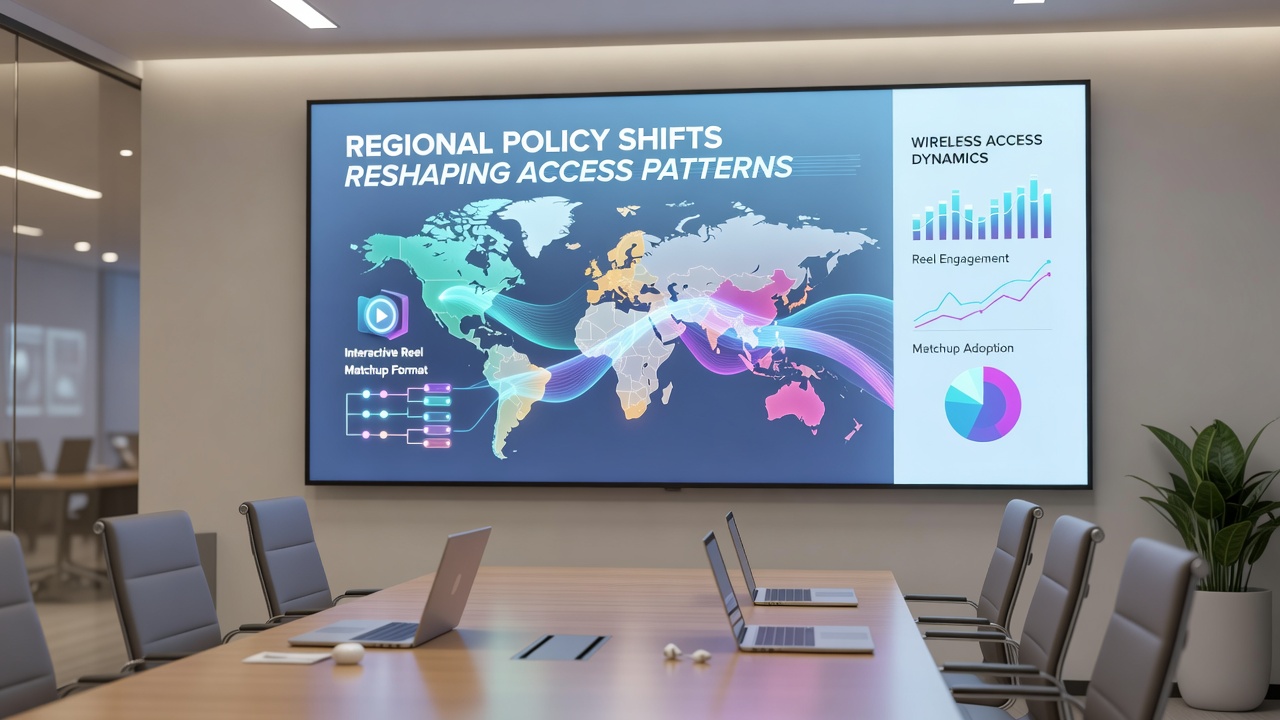
Regional governments have adjusted licensing frameworks and network regulations throughout 2025 and into 2026, and these measures now guide how users reach interactive reel sequences and card-based matchup sessions over wireless connections. Jurisdictions in Asia, North America, and Europe introduced updated compliance layers that require operators to verify location data, manage data throughput, and align with local spectrum rules before delivering content to mobile devices.
North American Adjustments Drive Network-Level Controls
State and provincial authorities in the United States and Canada expanded geo-fencing requirements during the first half of 2026, which forced platform providers to route traffic through designated wireless towers and limit session lengths when users cross borders. In June 2026 several Midwest states synchronized their verification protocols with Canadian provincial standards, and this alignment reduced cross-border latency while increasing the number of authentication checkpoints that mobile sessions must complete before reels or matchups load. Operators responded by embedding network-aware modules that detect carrier signals and throttle high-bandwidth features such as live dealer streams when signal strength drops below thresholds set by regulators.
Asia-Pacific Licensing Updates Alter Mobile Distribution
Regulatory bodies across Southeast Asia and Oceania revised spectrum allocation policies that indirectly shape wireless delivery of reel and matchup formats. Singapore’s Casino Regulatory Authority tightened bandwidth caps on unlicensed foreign operators, and Australian state commissions required local caching of game assets to comply with data-sovereignty statutes. These steps prompted carriers to prioritize traffic from domestically licensed providers, which in turn shifted peak-hour access patterns away from offshore servers and toward regional data centers. Mobile analytics collected through mid-2026 show increased session initiation rates on domestic networks and corresponding declines on international roaming connections.
European Framework Harmonization Affects Verification Speed
European Union member states continued to align digital services rules that cover remote gaming applications, and the updated guidelines effective in spring 2026 emphasized faster identity checks tied to SIM registration data. Platforms adapted by integrating carrier-grade APIs that pull device and subscription details directly from network operators, and this integration shortened the time between app launch and first reel spin or card matchup. At the same time, several countries imposed volume-based reporting on wireless traffic related to gaming, which encouraged operators to compress graphical assets and reduce data packets per session without altering core gameplay mechanics.
Impact on User Behavior and Infrastructure Demand
Network operators recorded measurable changes in data consumption profiles once the new policies took effect. Sessions involving layered reel mechanics or real-time matchup tables began to cluster around periods of stable 5G coverage, and users in regulated zones showed higher completion rates when connections met minimum latency standards. Infrastructure providers upgraded edge servers near major population centers to handle the redistributed load, while rural areas experienced slower rollout of enhanced features because carriers prioritized compliance upgrades over capacity expansion.
Research compiled by the University of Nevada, Las Vegas gaming research unit indicates that verification velocity directly correlates with session retention across wireless environments, and jurisdictions that streamlined SIM-linked checks saw steadier engagement curves than those relying solely on IP-based filters. Operators in these markets adjusted payout schedules and bonus triggers to match the new session-length distributions observed on mobile networks.
Future Infrastructure Considerations
Industry associations such as the European Gaming and Betting Association have published projections showing continued investment in network-integrated compliance tools through 2027. These tools combine real-time location services with encrypted transaction channels, and they allow operators to maintain consistent reel and matchup availability while satisfying regional reporting mandates. Carriers in multiple markets are testing dedicated network slices reserved for licensed gaming traffic, which would isolate gaming packets from general consumer data flows and potentially stabilize access speeds during peak regulatory audit periods.
Conclusion
Policy developments across continents continue to recalibrate the technical pathways that connect users to interactive reel sequences and matchup formats on wireless networks. As licensing, verification, and spectrum rules evolve, operators and carriers refine their infrastructure to maintain service continuity within the boundaries set by each jurisdiction. The patterns observed through June 2026 suggest that future adjustments will focus on tighter integration between regulatory databases and mobile network management systems rather than outright restrictions on content delivery.