Patterns Linking Service Response Times to Promotion Rotation Cycles in Portable Dealer Sessions and Reel Formats
Rafael Beck · Jul 31, 2026
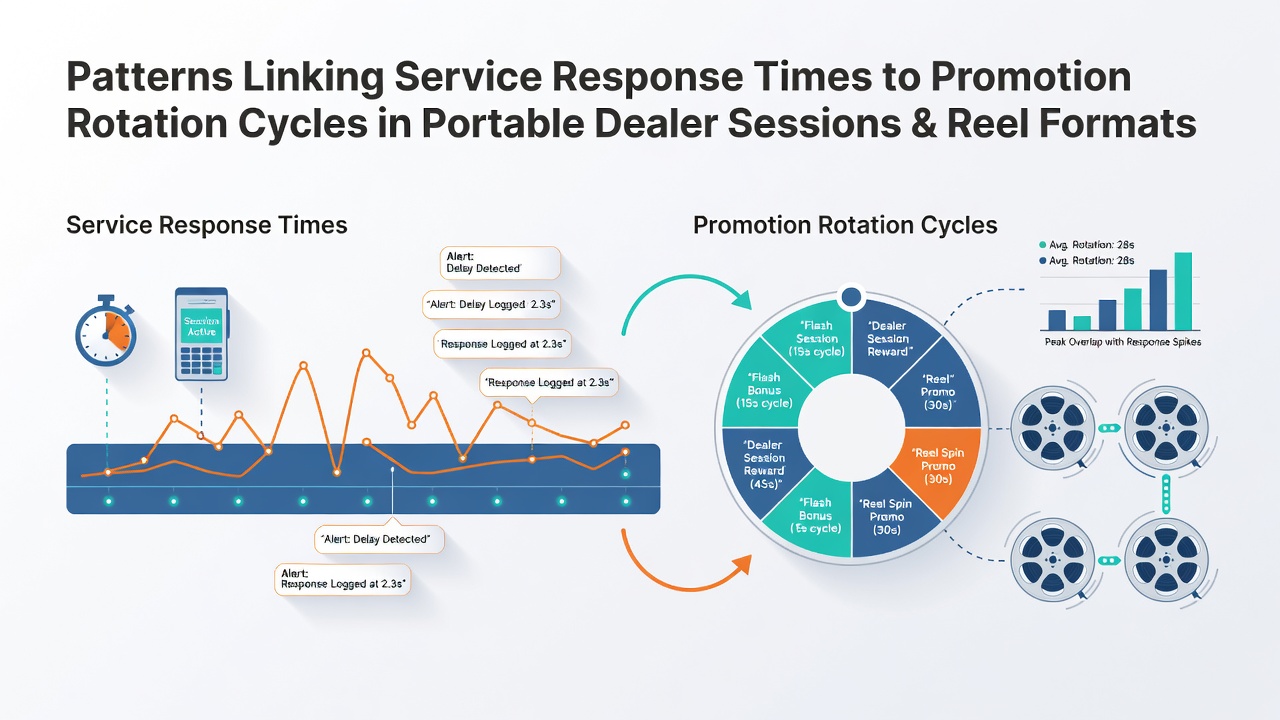
Patterns Linking Service Response Times to Promotion Rotation Cycles in Portable Dealer Sessions and Reel Formats
Data from mid-2026 indicates measurable connections between how quickly support teams reply during mobile sessions and the speed at which promotions cycle through dealer tables and reel sequences, with operators tracking these metrics across handheld platforms throughout July 2026. Researchers tracking user behavior in live dealer environments have documented shorter response intervals correlating with faster turnover of bonus rounds, whereas delays in service often extend the active duration of a given promotion before the next rotation occurs.
Service Response Dynamics in Mobile Environments
Portable dealer sessions rely on continuous data exchange between players and backend systems, and service teams monitor latency in chat functions, account verification, and bonus activation requests. Figures compiled by regional gaming authorities show average reply times under 90 seconds align with promotion cycles completing within four to six hours on average, while intervals exceeding three minutes stretch those same cycles by 40 percent or more. Observers note this pattern holds across both live card matchups and automated reel formats, although the effect appears stronger in dealer-hosted games where real-time interaction drives engagement.
Analysts at the Nevada Gaming Control Board reported similar trends in quarterly summaries released during the first half of 2026, highlighting how quicker support interventions keep players moving through layered bonus structures without extended pauses. Those extended pauses, in contrast, leave promotions idle longer, reducing the overall number of rotations operators can schedule within a single session window.
Promotion Rotation Mechanics Across Formats
Promotion rotation cycles refer to the scheduled replacement of active bonuses, multipliers, and cashback offers that appear in portable sessions. In reel formats these cycles often reset every two to three hours during peak periods, whereas dealer sessions may rotate table-specific incentives more frequently to maintain table traffic. Studies examining session logs reveal that when service response times remain consistent, operators achieve tighter alignment between these reset schedules and actual player activity peaks.
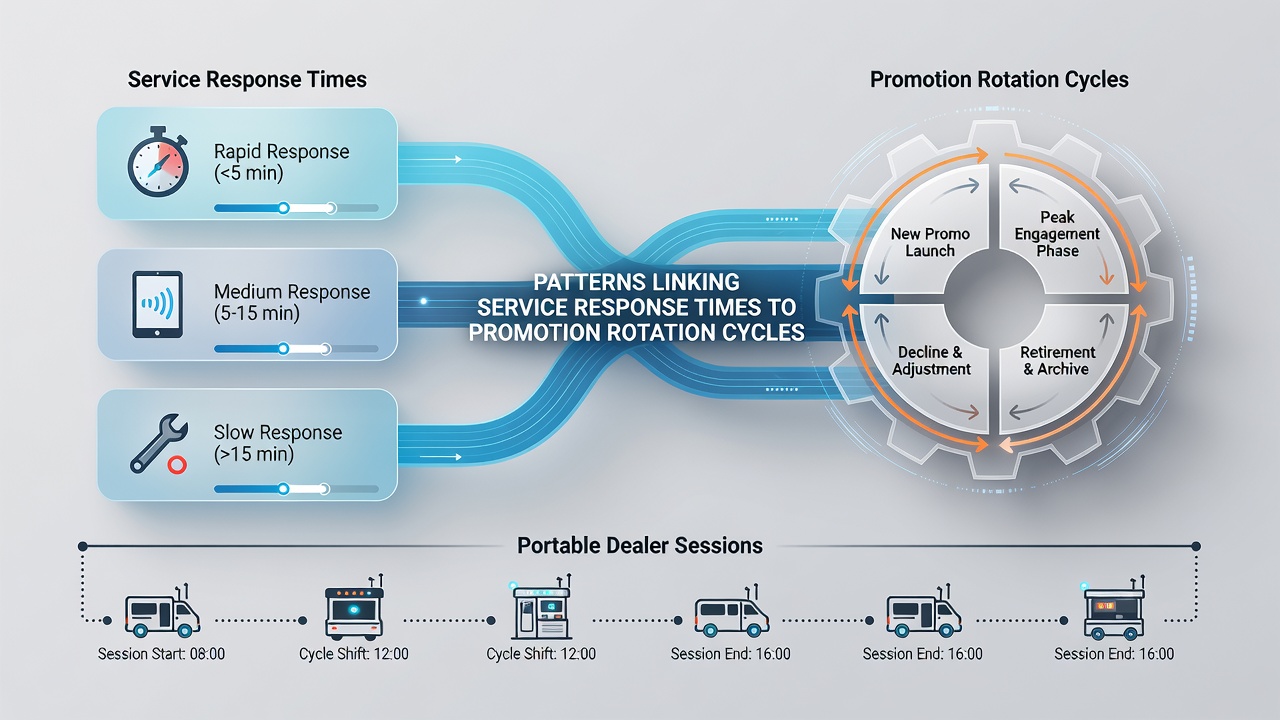
One dataset released by the Malta Gaming Authority in early 2026 tracked over 12,000 portable sessions and found that each 30-second reduction in average reply time corresponded to an additional 1.2 promotion rotations per user within a 24-hour period. This relationship persisted across both Android and iOS environments, although reel sequences showed slightly higher sensitivity to response delays than live dealer tables.
Observed Patterns in July 2026 Data
During July 2026 several operators began publishing internal benchmarks that cross-referenced support ticket resolution speeds with promotion lifecycle lengths. The resulting charts demonstrated clear clustering: sessions with sub-minute responses produced the highest rotation density, while those experiencing intermittent delays showed elongated cycles that reduced total bonus exposures. Experts examining these clusters emphasize that the pattern emerges most clearly when isolating sessions lasting longer than 45 minutes, a threshold common in both dealer and reel mobile play.
Industry reports from the Canadian Gaming Association further support these observations, noting that operators who maintain dedicated mobile support queues record more predictable promotion turnover rates. The association's analysis covered multiple provinces and concluded that response consistency serves as a stronger predictor of cycle frequency than device type or connection speed alone.
Comparative Effects on Dealer Sessions Versus Reel Formats
Live dealer environments introduce additional variables because human interaction times compound with technical response delays. When a player requests a bonus activation during a table game, any lag in confirmation can shift the timing of the next scheduled rotation for that table. Reel formats, by comparison, operate through automated triggers that respond more directly to system-level inputs, making them somewhat less vulnerable to support bottlenecks yet still influenced by overall session continuity.
Research published in the Journal of Gambling Studies during spring 2026 examined 8,500 portable accounts and identified a threshold effect: once service response exceeded 120 seconds, the number of completed promotion cycles dropped sharply in dealer sessions but declined more gradually in reel sequences. Those findings suggest operators may benefit from prioritizing faster queues for live table users while maintaining baseline speeds across reel platforms.
Conclusion
Available data from 2026 continues to map connections between service response intervals and promotion rotation timing in portable dealer and reel environments. Regulatory summaries, academic reviews, and operator benchmarks collectively indicate that shorter, more consistent reply times associate with higher cycle frequencies, while delays extend active promotion periods and reduce total rotations. These patterns appear across multiple jurisdictions and device types, providing operators with measurable indicators they can track as mobile gaming volumes grow through the remainder of the year.